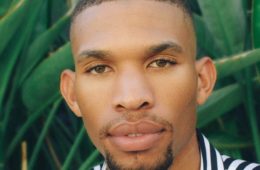
The Storyteller, a late twentysomething from the midwest, is an African-American of Creole descent.
His warm energy and kind smile are at once disarming and al... Go Deeper
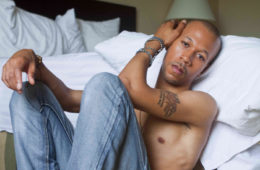
Terrence, a late-thirtysomething who lives in the DMV area, knows what it means to support those he cares about.
An activist, super-connector, and socialite, h... Go Deeper
Emanz is an early-twentysomething who bounced back and forth between New York City and Jamaica for most of his life, and now resides in California.
From the be... Go Deeper
Bevin, an early-twentysomething from Texas, is at once thoughtful and inquisitive, especially when it comes to discussing masculinity and this whole thing we li... Go Deeper
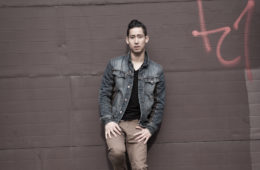
Adam, a mid-twentysomething of white and Korean descent, has thought a lot about how he’s become the man he is today.
From rethinking his own standards of beau... Go Deeper
Gerald, a mid-twentysomething Filipino American, has all kinds of brilliant ideas about beauty, masculinity, and male desire.
A deep thinker with a strong but ... Go Deeper
Sheepy, an early-twenty something aspiring model living in Atlanta is of Caribbean (Dominican Republic) and Middle Eastern (Lebanon) descent.
And if you think ... Go Deeper
Franklin, a late-twentysomething Asian American of Taiwanese descent, knows what it’s like to juggle two cultures while sometimes not feeling like you belong to... Go Deeper
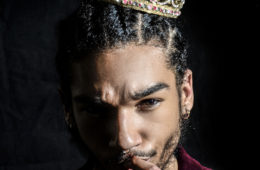
LaQuann, an early-twentysomething who lives in New York City, stands out from the crowd.
And although his beauty and wonderfully lush afro might be the first t... Go Deeper
DeAndre, a late-twentysomething now living in New York City, is certainly more than meets the eye.
A bundle of warm energy, he’s sure to light up a room. But t... Go Deeper
Pin It on Pinterest
The Healing Literacy Framework
In 2019, Keith F. Miller, Jr., observed something remarkable while running creative writing after school programs in Savannah, GA: Students from all backgrounds didn’t just step outside their comfort zones—they learned, led, and thrived with unmistakable joy. Despite this, Keith heard from students and families that school, even for the high-achievers, was a place they survived, not thrived. This led Keith, through his studies in Educational Psychology, to explore why young people felt empowered to learn, lead, and heal in some spaces but not in others.
Through a qualitative research study involving interviews with high schoolers, fellow teaching artists over a year, in addition to examining creative works from youth journals and performances, Keith found that when young people engage in arts-based healing practices with trusted others (peers and adults), they don’t just cope with their struggles—they transform them, becoming vibrant leaders in the process.
Drawing inspiration from the process of rainbow formation—reflection, refraction, and dispersion—and building off of groundbreaking research from scholars like David Kirkland, Gholdy Muhammad, Bettina Love, Bianca Baldridge, and Shawn Ginwright, Keith developed the Healing Literacy Framework, illustrating how arts-based, community programs are vital in supporting young people as they overcome educational trauma, and, in doing so, can result in transformative partnerships in school and beyond that prove healing is possible for everyone.
Enter, HEALIT
In 2019, Keith F. Miller, Jr., observed something remarkable while running creative writing after school programs in Savannah, GA: Students from all backgrounds didn’t just step outside their comfort zones—they learned, led, and thrived with unmistakable joy. Despite this, Keith heard from students and families that school, even for the high-achievers, was a place they survived, not thrived. This led Keith, through his studies in Educational Psychology, to explore why young people felt empowered to learn, lead, and heal in some spaces but not in others.
Through a qualitative research study involving interviews with high schoolers, fellow teaching artists over a year, in addition to examining creative works from youth journals and performances, Keith found that when young people engage in arts-based healing practices with trusted others (peers and adults), they don’t just cope with their struggles—they transform them, becoming vibrant leaders in the process.
Drawing inspiration from the process of rainbow formation—reflection, refraction, and dispersion—and building off of groundbreaking research from scholars like David Kirkland, Gholdy Muhammad, Bettina Love, Bianca Baldridge, and Shawn Ginwright, Keith developed the Healing Literacy Framework, illustrating how arts-based, community programs are vital in supporting young people as they overcome educational trauma, and, in doing so, can result in transformative partnerships in school and beyond that prove healing is possible for everyone.