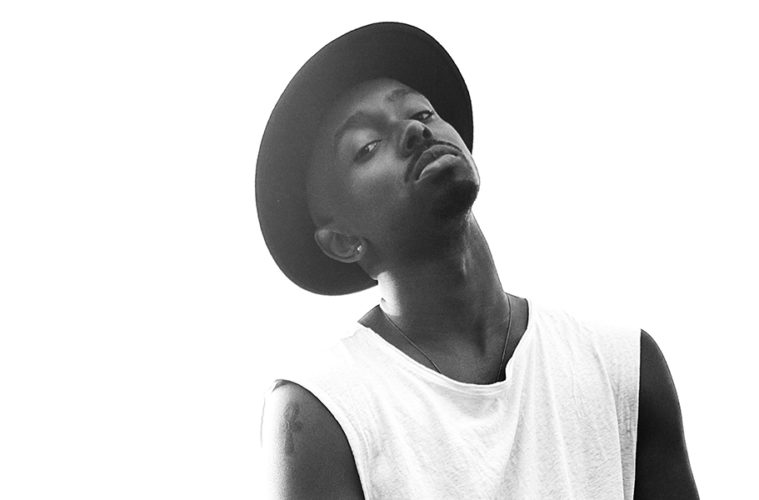
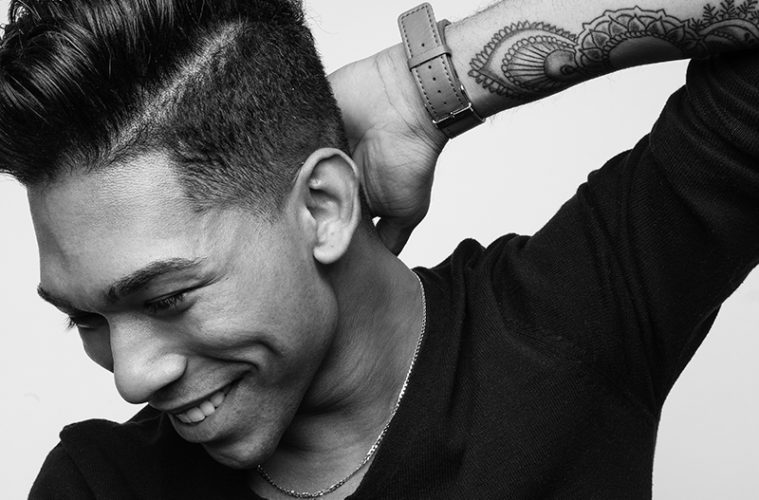
Jarren Simmons, a late twentysomething from the West Coast, is of African and European descent.
A 6 foot 3 former football player at Yale who got his bachelor’... Go Deeper
Gordie Holt, a late thirtysomething from the West Coast and the South, is an African-American of Native American descent. He has beauty, but what stands out is ... Go Deeper
Cameron is a late-twentysomething bass-baritone from New York who now lives in London.
Fearless in his own right, the stage isn’t the only place he works hard ... Go Deeper
Brian Waldron, an early twentysomething from the Bronx, is of Guyanese descent. If you ask him directly, he’ll say he isn’t anything special--just a regular guy... Go Deeper
Asad, a late-twentysomething from New York and Florida, is of Caribbean descent (Panama and St. Martin). An aspiring actor and model, he’s more than familiar wi... Go Deeper
Anttoni Lopez, an early thirtysomething from the Bronx, is of Puerto Rican, Palestinian, and Italian descent.
Strong but soft facial features, an athletic build... Go Deeper
Depending on the type of interview, the timeline from interview to article will vary. But it generally can take six to eight weeks to complete the first draft o... Go Deeper
How to Prepare
Whether you're a pro at being interviewed or this is the first time anyone has ever asked you to tell your story, below are so... Go Deeper
Thinking about participating but not sure what to expect? Here are a few words from recent Pillow Talkers:
“The Pillow Talk Project levels the playing field w... Go Deeper
So, you’re interested in The Pillow Talk Project, eh? Fantastic! Here’s a quick overview of our formal interview process:
Complete the 7-Minute Pre-Interview S... Go Deeper
Storyteller, creative, and educator constantly dreaming up new ways to bring social change to the masses.
Pin It on Pinterest
The Healing Literacy Framework
In 2019, Keith F. Miller, Jr., observed something remarkable while running creative writing after school programs in Savannah, GA: Students from all backgrounds didn’t just step outside their comfort zones—they learned, led, and thrived with unmistakable joy. Despite this, Keith heard from students and families that school, even for the high-achievers, was a place they survived, not thrived. This led Keith, through his studies in Educational Psychology, to explore why young people felt empowered to learn, lead, and heal in some spaces but not in others.
Through a qualitative research study involving interviews with high schoolers, fellow teaching artists over a year, in addition to examining creative works from youth journals and performances, Keith found that when young people engage in arts-based healing practices with trusted others (peers and adults), they don’t just cope with their struggles—they transform them, becoming vibrant leaders in the process.
Drawing inspiration from the process of rainbow formation—reflection, refraction, and dispersion—and building off of groundbreaking research from scholars like David Kirkland, Gholdy Muhammad, Bettina Love, Bianca Baldridge, and Shawn Ginwright, Keith developed the Healing Literacy Framework, illustrating how arts-based, community programs are vital in supporting young people as they overcome educational trauma, and, in doing so, can result in transformative partnerships in school and beyond that prove healing is possible for everyone.
Enter, HEALIT
In 2019, Keith F. Miller, Jr., observed something remarkable while running creative writing after school programs in Savannah, GA: Students from all backgrounds didn’t just step outside their comfort zones—they learned, led, and thrived with unmistakable joy. Despite this, Keith heard from students and families that school, even for the high-achievers, was a place they survived, not thrived. This led Keith, through his studies in Educational Psychology, to explore why young people felt empowered to learn, lead, and heal in some spaces but not in others.
Through a qualitative research study involving interviews with high schoolers, fellow teaching artists over a year, in addition to examining creative works from youth journals and performances, Keith found that when young people engage in arts-based healing practices with trusted others (peers and adults), they don’t just cope with their struggles—they transform them, becoming vibrant leaders in the process.
Drawing inspiration from the process of rainbow formation—reflection, refraction, and dispersion—and building off of groundbreaking research from scholars like David Kirkland, Gholdy Muhammad, Bettina Love, Bianca Baldridge, and Shawn Ginwright, Keith developed the Healing Literacy Framework, illustrating how arts-based, community programs are vital in supporting young people as they overcome educational trauma, and, in doing so, can result in transformative partnerships in school and beyond that prove healing is possible for everyone.