Growing up in a family of women, there’s one thing I’ve heard over and over: a good man is hard to find. There seemed to be countless stories about the men who ... Go Deeper
We don’t talk about it enough. The pain that comes with being forced into a box. The pain that comes from someone being angry and saying the most derogatory thi... Go Deeper
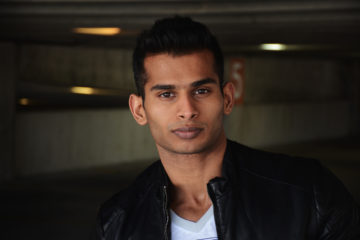
Sadique, an early-twentysomething from India, is more than meets the eye.
Beneath his calm and focused exterior is a man with a past: The former fat kid who wa... Go Deeper
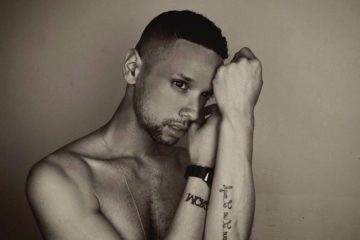
Emmanuel, a late-twentysomething born in Puerto Rico but raised in New York, grew up without a father.
But as you’ll soon find out, he did just fine because of... Go Deeper
Is a boy’s life harder when he doesn’t have a male or father figure in his life? Can a woman really teach a boy how to become a man? Both are fiercely debated q... Go Deeper
It’s all a journey. The path to happiness, from sadness, through anger--and back again. It’s unpredictable with twists, turns, and stops. Yet it’s something we ... Go Deeper
As Franklin explains, “We live in a world of 8 billion people, and to be connected and intimate with a person is special because it doesn’t happen a lot.” And w... Go Deeper
The journey from boyhood to manhood is hard. But it’s even harder when it feels like you aren’t even considered a man to begin with. With stereotypes that “all ... Go Deeper
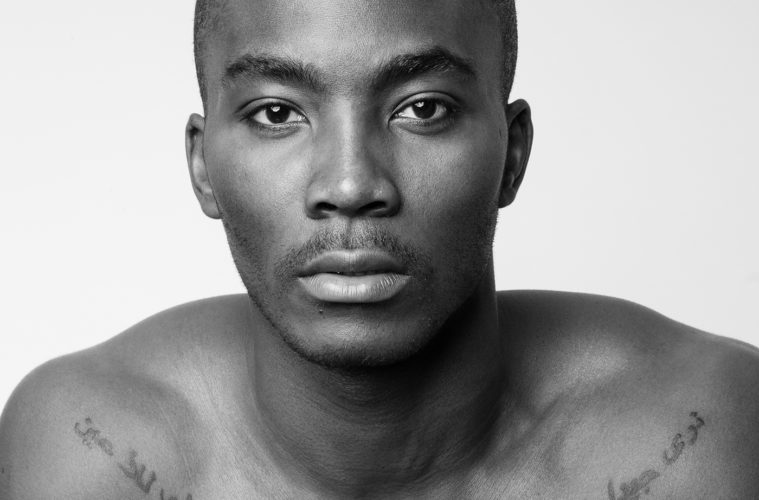
Junior is a late-twentysomething from the Ivory Coast of West Africa currently living in New York City.
Although the first thing you might notice is his striki... Go Deeper
Tristan Eastman, an early-thirtysomething from New Jersey and the Caribbean, is of Guyanese and Trinidadian descent.
When you first meet him, the first thing y... Go Deeper
Storyteller, creative, and educator constantly dreaming up new ways to bring social change to the masses.
Pin It on Pinterest
The Healing Literacy Framework
In 2019, Keith F. Miller, Jr., observed something remarkable while running creative writing after school programs in Savannah, GA: Students from all backgrounds didn’t just step outside their comfort zones—they learned, led, and thrived with unmistakable joy. Despite this, Keith heard from students and families that school, even for the high-achievers, was a place they survived, not thrived. This led Keith, through his studies in Educational Psychology, to explore why young people felt empowered to learn, lead, and heal in some spaces but not in others.
Through a qualitative research study involving interviews with high schoolers, fellow teaching artists over a year, in addition to examining creative works from youth journals and performances, Keith found that when young people engage in arts-based healing practices with trusted others (peers and adults), they don’t just cope with their struggles—they transform them, becoming vibrant leaders in the process.
Drawing inspiration from the process of rainbow formation—reflection, refraction, and dispersion—and building off of groundbreaking research from scholars like David Kirkland, Gholdy Muhammad, Bettina Love, Bianca Baldridge, and Shawn Ginwright, Keith developed the Healing Literacy Framework, illustrating how arts-based, community programs are vital in supporting young people as they overcome educational trauma, and, in doing so, can result in transformative partnerships in school and beyond that prove healing is possible for everyone.
Enter, HEALIT
In 2019, Keith F. Miller, Jr., observed something remarkable while running creative writing after school programs in Savannah, GA: Students from all backgrounds didn’t just step outside their comfort zones—they learned, led, and thrived with unmistakable joy. Despite this, Keith heard from students and families that school, even for the high-achievers, was a place they survived, not thrived. This led Keith, through his studies in Educational Psychology, to explore why young people felt empowered to learn, lead, and heal in some spaces but not in others.
Through a qualitative research study involving interviews with high schoolers, fellow teaching artists over a year, in addition to examining creative works from youth journals and performances, Keith found that when young people engage in arts-based healing practices with trusted others (peers and adults), they don’t just cope with their struggles—they transform them, becoming vibrant leaders in the process.
Drawing inspiration from the process of rainbow formation—reflection, refraction, and dispersion—and building off of groundbreaking research from scholars like David Kirkland, Gholdy Muhammad, Bettina Love, Bianca Baldridge, and Shawn Ginwright, Keith developed the Healing Literacy Framework, illustrating how arts-based, community programs are vital in supporting young people as they overcome educational trauma, and, in doing so, can result in transformative partnerships in school and beyond that prove healing is possible for everyone.