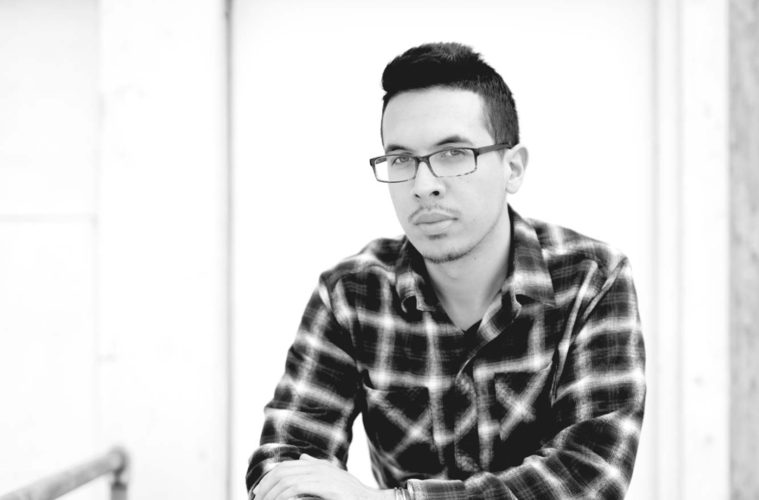
The strongest of us are willing to not only fight battles others won’t, but often on the behalf of those who can’t fight for themselves.
As Timothy explains, “... Go Deeper
JoyBell C. explains, “Manhood is defined and decided by the ability to nurture and to protect, by the capability to provide and to sustain.” Such a definition o... Go Deeper
James Clarke tells us, “All boys wish to be manly; but they often try to become so by copying the vices of men rather than their virtues.” And for many that see... Go Deeper
The bulk of content on The Pillow Talk Project is written. As a result, we are always looking for passionate, thorough and meticulous researchers, writers, and ... Go Deeper
The bar for photography/video submissions on The Pillow Talk Project is high, so all photographers/videographers interested in having work commissioned by us mu... Go Deeper
Hari, a mid-twentysomething Cleveland native living in New York City, is a siren of change. But not just any change. The uncomfortable kind that requires us to ... Go Deeper
What are you willing to stand for? Are you willing to die for it? When we put aside the “Give me ____ or give me death” glamorized stance, we eventually find ou... Go Deeper
Intimacy may look different to everyone, but there’s no doubt about its powerful role in our lives. What it requires. What it demands. What it provides.
It mol... Go Deeper
For some, the conversation around masculinity is a long, tired one. It’s debated, bemoaned, and analyzed a million times over. Yet so few talk about masculinity... Go Deeper
Eric, a mid-twentysomething from Milwaukee, WI, is one hell of a Human. Soul. Artist. Change-maker. He’s survived a lot. And his (invisible) scars bring and bre... Go Deeper
Storyteller, creative, and educator constantly dreaming up new ways to bring social change to the masses.
Pin It on Pinterest
The Healing Literacy Framework
In 2019, Keith F. Miller, Jr., observed something remarkable while running creative writing after school programs in Savannah, GA: Students from all backgrounds didn’t just step outside their comfort zones—they learned, led, and thrived with unmistakable joy. Despite this, Keith heard from students and families that school, even for the high-achievers, was a place they survived, not thrived. This led Keith, through his studies in Educational Psychology, to explore why young people felt empowered to learn, lead, and heal in some spaces but not in others.
Through a qualitative research study involving interviews with high schoolers, fellow teaching artists over a year, in addition to examining creative works from youth journals and performances, Keith found that when young people engage in arts-based healing practices with trusted others (peers and adults), they don’t just cope with their struggles—they transform them, becoming vibrant leaders in the process.
Drawing inspiration from the process of rainbow formation—reflection, refraction, and dispersion—and building off of groundbreaking research from scholars like David Kirkland, Gholdy Muhammad, Bettina Love, Bianca Baldridge, and Shawn Ginwright, Keith developed the Healing Literacy Framework, illustrating how arts-based, community programs are vital in supporting young people as they overcome educational trauma, and, in doing so, can result in transformative partnerships in school and beyond that prove healing is possible for everyone.
Enter, HEALIT
In 2019, Keith F. Miller, Jr., observed something remarkable while running creative writing after school programs in Savannah, GA: Students from all backgrounds didn’t just step outside their comfort zones—they learned, led, and thrived with unmistakable joy. Despite this, Keith heard from students and families that school, even for the high-achievers, was a place they survived, not thrived. This led Keith, through his studies in Educational Psychology, to explore why young people felt empowered to learn, lead, and heal in some spaces but not in others.
Through a qualitative research study involving interviews with high schoolers, fellow teaching artists over a year, in addition to examining creative works from youth journals and performances, Keith found that when young people engage in arts-based healing practices with trusted others (peers and adults), they don’t just cope with their struggles—they transform them, becoming vibrant leaders in the process.
Drawing inspiration from the process of rainbow formation—reflection, refraction, and dispersion—and building off of groundbreaking research from scholars like David Kirkland, Gholdy Muhammad, Bettina Love, Bianca Baldridge, and Shawn Ginwright, Keith developed the Healing Literacy Framework, illustrating how arts-based, community programs are vital in supporting young people as they overcome educational trauma, and, in doing so, can result in transformative partnerships in school and beyond that prove healing is possible for everyone.