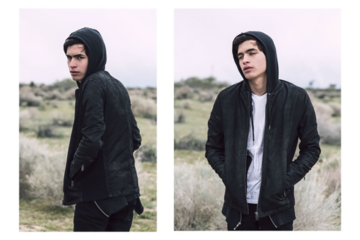
Sheepy, an early-twenty something aspiring model living in Atlanta is of Caribbean (Dominican Republic) and Middle Eastern (Lebanon) descent.
And if you think ... Go Deeper
Our definition of normal depends on our surroundings. So, if you look around and everyone looks like you, it’s assumed that you are normal.
But what if you’re ... Go Deeper
Being different can be hard, especially when you’re from a small town where the standard of masculinity is completely different from how you see yourself.
Add ... Go Deeper
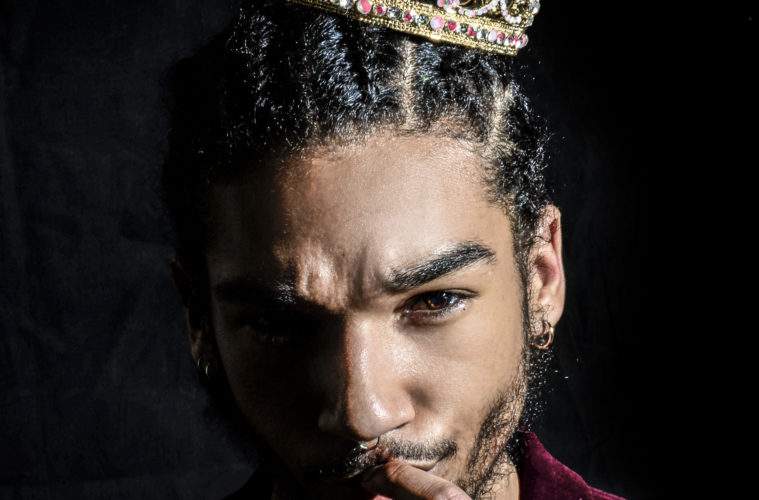
Saint, an early-twentysomething California dreamer is of Spanish and Honduran descent.
And after you manage to get over his striking features and bewitching ey... Go Deeper
Intimacy requires a level of connection and oneness that is only possible when a person is able to be truly vulnerable. So what does it mean to be vulnerable?
... Go Deeper
We all know the feeling. The moment you gaze upon someone and it takes your breath away.
The moment where the feeling starts in the pit of your stomach and wor... Go Deeper
Franklin, a late-twentysomething Asian American of Taiwanese descent, knows what it’s like to juggle two cultures while sometimes not feeling like you belong to... Go Deeper
We like to think we have everyone pegged: the white jock the girls love and who seems to have it all, the Asian boy that aces all the tests effortlessly, the bl... Go Deeper
LaQuann, an early-twentysomething who lives in New York City, stands out from the crowd.
And although his beauty and wonderfully lush afro might be the first t... Go Deeper
In the eyes of their sons, fathers represent who they could and will be. And in the eyes of their fathers, sons represent a dream made real. But what happens wh... Go Deeper
Storyteller, creative, and educator constantly dreaming up new ways to bring social change to the masses.
Pin It on Pinterest
The Healing Literacy Framework
In 2019, Keith F. Miller, Jr., observed something remarkable while running creative writing after school programs in Savannah, GA: Students from all backgrounds didn’t just step outside their comfort zones—they learned, led, and thrived with unmistakable joy. Despite this, Keith heard from students and families that school, even for the high-achievers, was a place they survived, not thrived. This led Keith, through his studies in Educational Psychology, to explore why young people felt empowered to learn, lead, and heal in some spaces but not in others.
Through a qualitative research study involving interviews with high schoolers, fellow teaching artists over a year, in addition to examining creative works from youth journals and performances, Keith found that when young people engage in arts-based healing practices with trusted others (peers and adults), they don’t just cope with their struggles—they transform them, becoming vibrant leaders in the process.
Drawing inspiration from the process of rainbow formation—reflection, refraction, and dispersion—and building off of groundbreaking research from scholars like David Kirkland, Gholdy Muhammad, Bettina Love, Bianca Baldridge, and Shawn Ginwright, Keith developed the Healing Literacy Framework, illustrating how arts-based, community programs are vital in supporting young people as they overcome educational trauma, and, in doing so, can result in transformative partnerships in school and beyond that prove healing is possible for everyone.
Enter, HEALIT
In 2019, Keith F. Miller, Jr., observed something remarkable while running creative writing after school programs in Savannah, GA: Students from all backgrounds didn’t just step outside their comfort zones—they learned, led, and thrived with unmistakable joy. Despite this, Keith heard from students and families that school, even for the high-achievers, was a place they survived, not thrived. This led Keith, through his studies in Educational Psychology, to explore why young people felt empowered to learn, lead, and heal in some spaces but not in others.
Through a qualitative research study involving interviews with high schoolers, fellow teaching artists over a year, in addition to examining creative works from youth journals and performances, Keith found that when young people engage in arts-based healing practices with trusted others (peers and adults), they don’t just cope with their struggles—they transform them, becoming vibrant leaders in the process.
Drawing inspiration from the process of rainbow formation—reflection, refraction, and dispersion—and building off of groundbreaking research from scholars like David Kirkland, Gholdy Muhammad, Bettina Love, Bianca Baldridge, and Shawn Ginwright, Keith developed the Healing Literacy Framework, illustrating how arts-based, community programs are vital in supporting young people as they overcome educational trauma, and, in doing so, can result in transformative partnerships in school and beyond that prove healing is possible for everyone.